
6 Easy Fixes if You Keep Falling Off a Paddle Board
Falling off a paddle board usually happens because of small balance mistakes, not because paddle boarding is too hard. Most beginners tip into the water during their first few outings, and that is completely normal. Once you understand why it happens and how to adjust your stance and technique, the board suddenly feels much more stable.
If you have ever stepped onto a paddle board and splashed into the lake within minutes, you are not alone. Almost every paddler remembers that first wobble. The board shifts, your feet tense up, and suddenly you are swimming instead of paddling. The funny part is that the fix is often simple.
Many riders learn these basics during beginner lake sessions with Blu Wave Board Co., where instructors teach balance and board control. The right board also matters width and stability can greatly improve confidence on the water.
So if you keep slipping into the lake, what should you change first? Let’s walk through six simple fixes that help most beginners stay upright and paddle longer.
Why Beginners Keep Falling Off a Paddle Board
Before fixing the problem, it helps to understand why it happens. A paddle board floats easily, but it reacts quickly to body movement. Small shifts in weight can tilt the board or move it sideways.
Most new paddlers make the same mistake. They stiffen their legs and stare down at their feet. That tight posture throws off balance and makes every wobble feel worse.
You might be wondering something simple. Is falling off normal when learning? The short answer is yes. Balance takes time, just like learning to ride a bicycle. The difference is that once you understand the basics, stability improves very quickly.
In fact, many paddlers who start with lessons or guided lake sessions often find their balance improves within the first hour.
Let’s look at the most effective fixes.
1. Fix Your Foot Position First
Your stance is the foundation of balance. Stand too far forward or backward and the board becomes unstable. Stand too narrow and every wave feels exaggerated.
A good starting point is placing your feet about shoulder width apart. Your toes should face forward while your knees stay slightly bent.
If you feel the board rocking beneath you, resist the urge to lock your legs. A flexible stance absorbs small movements and keeps the board steady.
A few simple reminders help:
-
Keep your feet shoulder-width apart
-
Stand near the center handle of the board
-
Bend your knees slightly
-
Look forward, not down
These small adjustments often solve the biggest balance problems.
2. Stop Looking at Your Feet
This habit surprises many beginners. The moment you stare at your feet, your balance gets worse.
Why does that happen? Your body follows your eyes. When you look down, your shoulders tilt forward and your weight shifts toward the nose of the board.
Instead, keep your gaze toward the horizon. Pick a point on the shoreline and focus on it while paddling. Your body naturally aligns with your line of sight.
During beginner paddling experiences organized by Blu Wave Board Co., instructors often remind new riders to lift their heads and relax their shoulders. The change in balance feels immediate.
Suddenly the board stops wobbling as much.
3. Use Your Paddle for Balance

Many new paddlers treat the paddle only as a way to move forward. In reality, it also works as a balance tool.
When the paddle touches the water, it creates a third point of support. That extra contact helps steady your body.
Imagine walking on a narrow path with a hiking stick. The same idea applies here.
When the water feels choppy or the board starts rocking, place the paddle blade lightly into the water beside you. That small anchor point gives your body time to stabilize.
Experienced paddlers often follow a simple rhythm:
-
Keep the paddle moving regularly
-
Use light strokes to maintain stability
-
Avoid holding the paddle in the air too long
A moving paddle helps the board feel more predictable.
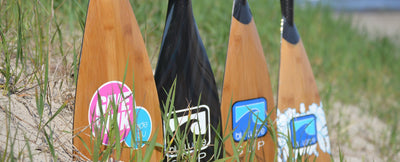
Check out the Blu Wave Paddles here.
4. Choose the Right Board for Your Skill Level

Sometimes the problem is not your balance at all. The board itself may not match your skill level.
Narrow performance boards move fast but require strong balance. Beginners usually feel more comfortable on wider boards that provide extra stability.
That is why many paddlers exploring the Paddleboards for Every Rider and Adventure collection at Blu Wave Board Co. often start with all-around boards. These designs offer a stable platform that builds confidence quickly.
When choosing a beginner friendly board, look for:
-
A wider deck for better balance
-
A thicker profile for extra buoyancy
-
Durable fins that improve tracking
-
A non-slip deck pad
-
Rigid boards over inflatables in choppy and wavy conditions
The right board can turn a frustrating first session into an enjoyable ride.
5. Relax Your Body Instead of Fighting the Board
When the board starts wobbling, beginners often tense up. Muscles tighten, shoulders rise, and balance disappears.
Ironically, staying relaxed helps you stay upright.
Think about standing on a bus while it moves through traffic. Your body naturally adjusts to small movements when you stay loose. The same principle applies on a paddle board.
Keep your knees soft and your arms relaxed. Let your body move with the water rather than resisting it.
A few habits make this easier:
-
Breathe slowly when you feel unstable
-
Keep your shoulders loose
-
Bend your knees slightly during small waves
-
Avoid sudden movements
The calmer you stay, the steadier the board feels.
6. Practice in Calm Water First
Many beginners try paddle boarding in windy or choppy conditions. That makes learning much harder.
Calm water gives your body time to understand balance. Early morning sessions often work best because wind levels stay low and the water surface remains smooth.
Some paddlers prefer starting in quiet bays or sheltered lakes where waves are minimal. Guided beginner sessions with Blu Wave Board Co. often take place in these calm locations for exactly this reason.
Before heading out, ask yourself a few simple questions:
-
Is the water calm today?
-
Is the wind light?
-
Is there a safe shoreline nearby?
Choosing the right conditions makes a huge difference during your first few sessions.
Safety Thoughts Every New Paddle Boarder Should Remember
Learning balance takes time, and falling into the water occasionally is part of the process. Even experienced paddlers take an unexpected splash now and then.
The key is staying safe while you learn. A few habits help beginners paddle with confidence.
Helpful reminders include:
-
Always wear a leash so your board stays nearby
-
Paddle with a friend when possible
-
Stay close to shore while learning
-
Check wind conditions before launching
These simple steps reduce risk and help you focus on improving your skills.
Many paddlers discover that their first few sessions feel awkward, yet something changes after a short while. Your legs start reacting automatically. The board feels steadier beneath your feet. The small movements that once caused a splash barely register.
And then one day you paddle across calm water without a single wobble and realize something surprising. The same board that once felt impossible now feels like the most natural place to stand. The only real question left becomes this. How far do you want to paddle next?